Best Brokerage Accounts 2026 in US: Top 5 Picks for Beginner ETF Investors
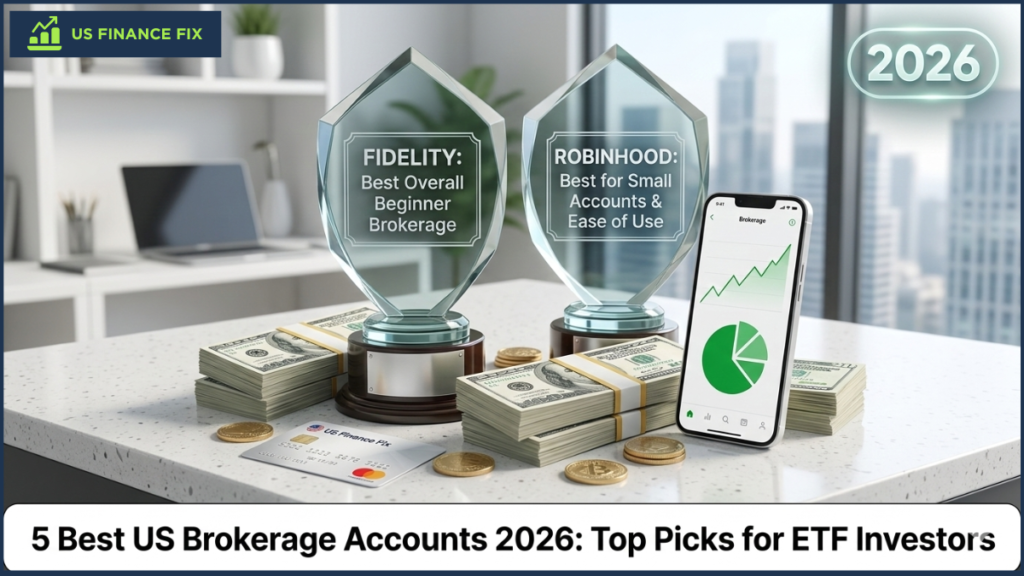
Ready to start investing but overwhelmed by apps and fees? This guide breaks down the best brokerage accounts 2026 in US for beginners who want to buy ETFs and stocks with low costs and simple interfaces.
Quick picks: Commission‑free trading, $0 account minimums, simple mobile apps, and solid education are what matter most for your first brokerage account.
How We Evaluated These Brokers
Choosing your first brokerage is about more than just a slick app. For US Finance Fix, we evaluated dozens of platforms based on:
- The “Total Cost of Ownership”: We only recommend brokers with $0 commissions and no monthly “platform fees.”
- Account minimum: We only recommend no or low account minimum so you can start with small amounts.
- Fractional Share Support: Beginners shouldn’t have to save $500 just to buy one share of an ETF. We prioritize brokers that let you buy as little as $1.
- Education Quality: A good beginner broker should explain what an ETF is while you’re looking at it.
- SIPC Protection: Every broker on this list is a member of the Securities Investor Protection Corporation, ensuring your assets are protected up to $500,000.
- Easy‑to‑use mobile app with clear charts and order screens
5 Best Brokerage Accounts 2026 in US for Beginner ETF Investors
| Broker | Stock/ETF Commissions | Account Minimum | Fractional Shares | Best For | Open Account |
|---|---|---|---|---|---|
| Fidelity | $0 | $0 | Yes | Total beginner, long‑term ETFs | Open → |
| Charles Schwab | $0 | $0 | Yes | Beginner + branch support | Open → |
| Vanguard | $0 Vanguard ETFs | $0 | Limited | Pure index ETF investors | Open → |
| Webull | $0 | $0 | Yes | Mobile‑first traders | Open → |
| Robinhood | $0 | $0 | Yes | Simple app, small portfolios | Open → |
Broker details may change; always check latest fees and terms on the broker’s site.
Fidelity: Best Overall for Long-Term Wealth
Fidelity is the “adult in the room.” While other apps focus on flashing lights and daily trading, Fidelity focuses on building wealth. Their app is simple enough for beginners and also powerful enough to grow with you.
- The Standout: Fidelity Zero Funds. They offer index funds with a 0% expense ratio—meaning it costs you literally nothing to own a piece of the entire stock market.
- Best For: Investors who want to set up an automatic monthly investment and forget about it.
- ✅ $0 commissions, $0 minimums
- ✅ Great no-fee or low‑cost index funds (like S&P 500 and total market)
- ✅ Fractional shares so you can invest any dollar amount
- ✅ Excellent customer service
Robinhood: Best for Small Portfolios & Ease of Use
Robinhood changed the game for beginners. If you are intimidated by finance jargon, this is your entry point.
- The Standout: The 3% IRA Match. In 2026, Robinhood remains one of the only brokers giving you extra cash just for contributing to your retirement.
- Best For: Gen Z and Millennial investors starting with $100 or less.
Schwab vs Vanguard vs Webull: Which Is Right for You?
| Broker | Pros | Cons |
|---|---|---|
| Schwab | Strong support, good app, $0 ETFs | Interface a bit more “traditional” |
| Vanguard | Great own ETFs, low fees | App/website less modern, not ideal for lots of trading |
| Webull | Sleek app, extended hours, charts | Lots of trading features can distract true beginners |
Simple ETF Starter Portfolio Example
Here’s a very simple example portfolio for US beginners who want broad diversification with just a few ETFs:
- 60% US Total Stock ETF – broad US market exposure
- 20% International Stock ETF – exposure outside the US
- 20% US Bond ETF – stability and income
You can build this with most brokers above using low‑cost ETFs.
Your First $100: Which ETFs Should You Buy?
Once you open your Fidelity or Schwab account, you might feel overwhelmed. Most US Finance Fix readers start with these three “Core” ETFs:
- VTI (Vanguard Total Stock Market): Own every single public company in the US for just pennies in fees.
- VXUS (Vanguard Total International Stock): Diversify outside of the US to capture global growth.
- VOO (Vanguard S&P 500): The gold standard. Invest in the 500 largest US companies.
Tip: You can buy all of these at any broker listed above with $0 commissions.
How to Open Your First Brokerage Account (Step‑by‑Step)
- Choose a broker from the table (Fidelity/Schwab are safest for most beginners).
- Go to the broker’s site using the “Open Account” link.
- Fill in your personal details, employment info, and investment profile (standard questions).
- Link your bank account to transfer money in (ACH transfer).
- Make your first small deposit (even $50–$100 to start learning).
- Search for your chosen ETF or stock symbol and place a market buy order.
Common Beginner Mistakes to Avoid
- Jumping into options/leveraged products before understanding basic ETFs.
- Over‑trading instead of buying and holding high‑quality, diversified funds.
- Ignoring fees on funds (look at the expense ratio).
- Putting money you need in the next 1–2 years into volatile assets.
Pro Tip: Investing is easier when you have a safety net. Before you put your last $1,000 into the stock market, make sure you have at least 3 months of expenses in a High-Yield Savings Account.
Best Brokerage Accounts 2026: FAQs
How much do I need to start investing?
You can start with as little as $10–$50 using fractional shares at most modern brokers.
Is my money safe in these brokers?
US brokers are generally SIPC‑insured up to certain limits (this protects securities if the broker fails, not market losses).
Should I pay someone to pick ETFs for me?
For most beginners, a simple low‑cost index fund strategy is enough. You can DIY with a basic plan.
Ready to start? Choose one of these best US brokerage accounts from the list above and open your account today. Then subscribe to our newsletter for weekly US finance tips.

Alex Hale is an independent personal finance researcher with a background in the US banking industry. Alex specializes in breaking down the fine print — Schumer Boxes, fee schedules, and cardholder agreements — so readers get the full picture before applying for any financial product.
More about Alex & our editorial process →Get the US Finance Fix Weekly
Join 1,200+ Americans receiving Alex Hale’s weekly breakdown of credit card secrets, debt-payoff strategies and investment opportunities.