How to Read a Mutual Fund Prospectus: 5 Red Flags to Look For Before You Invest
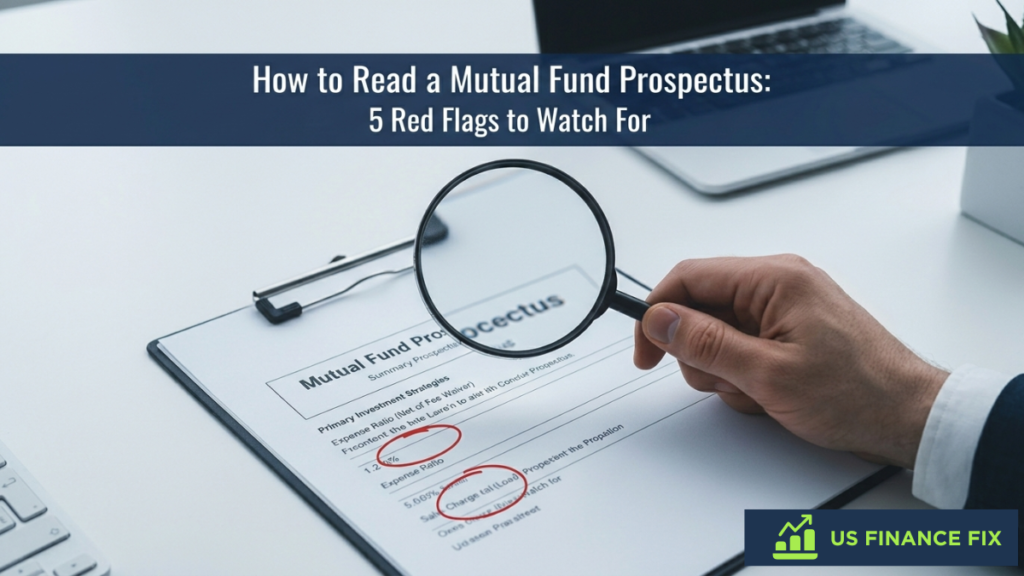
Most investors pick a mutual fund based on the “10-year average return” listed on the front page. That is a mistake. To understand what you are actually buying, you have to look at the Prospectus – the legal document that discloses the fund’s risks, costs, and strategy.
I’m Alex Hale, and today I’m going to show you how to cut through the 50-page legalese and find the 5 red flags that could drain your portfolio.
1. The Expense Ratio (Anything over 0.75% for a basic fund)
The expense ratio is the annual fee the fund charges to manage your money. It is expressed as a percentage. While 0.50% or 0.75% sounds small, the math of compounding works against you here.
The Math: Over 30 years, a 1% fee can eat nearly 25% of your total wealth compared to a low-cost index fund charging 0.05%.
2. The “Sales Load” (Front-end or back-end commissions)
Look for “Front-end loads” or “Back-end loads.” These are commissions paid to the person who sold you the fund. If a fund has a 5% front-end load and you invest $1,000, only $950 actually goes into the market. At US Finance Fix, we generally advocate for No-Load funds.
3. High Portfolio Turnover (Leading to “Tax Drag”)
This percentage tells you how often the fund manager buys and sells the stocks inside the fund. A turnover rate of $100\%$ means the manager replaced every single holding in the last year. High turnover leads to higher transaction costs and unwanted tax bills for you.
4. The “Style Drift” (When a safe fund starts taking risky bets)
Read the Principal Investment Strategy. If the fund is labeled as a “Large Cap Conservative Fund” but the holdings show speculative tech startups, the manager is “drifting” to chase returns. This increases your risk without your consent.
5. Manager Tenure (If the person who built the track record just left)
If the fund has a great 10-year track record but the lead manager left six months ago, that track record belongs to a ghost. Ensure the person responsible for the performance is still at the helm.
Alex’s Quick Prospectus Checklist
- ✅ Expense Ratio < 0.20% (for index funds)
- ✅ No Front-end or Back-end Loads
- ✅ Turnover Rate < 20%
- ✅ Clear, consistent strategy
How to Read a Mutual Fund Prospectus: Frequently Asked Questions
Where do I find the prospectus?
You can find it on the fund provider’s website (e.g., Vanguard, Fidelity, Schwab) or by searching the fund’s ticker symbol on the SEC’s EDGAR database. You can also find the prospectus PDF directly inside your online brokerage account dashboard.
What is a “Summary Prospectus”?
It is a shorter, 5-10 page version of the full document. It contains the most vital info: fees, risks, and performance. Start here before diving into the full document.
Does a high expense ratio ever justify the cost?
Rarely. Only if the manager consistently beats the benchmark index *after* fees, which statistically happens for less than 10% of active managers over the long term.

Alex Hale is an independent personal finance researcher with a background in the US banking industry. Alex specializes in breaking down the fine print — Schumer Boxes, fee schedules, and cardholder agreements — so readers get the full picture before applying for any financial product.
More about Alex & our editorial process →Get the US Finance Fix Weekly
Join 1,200+ Americans receiving Alex Hale’s weekly breakdown of credit card secrets, debt-payoff strategies and investment opportunities.