Chase Credit Journey Review 2026: Is It Safe, Accurate & Legitimate?
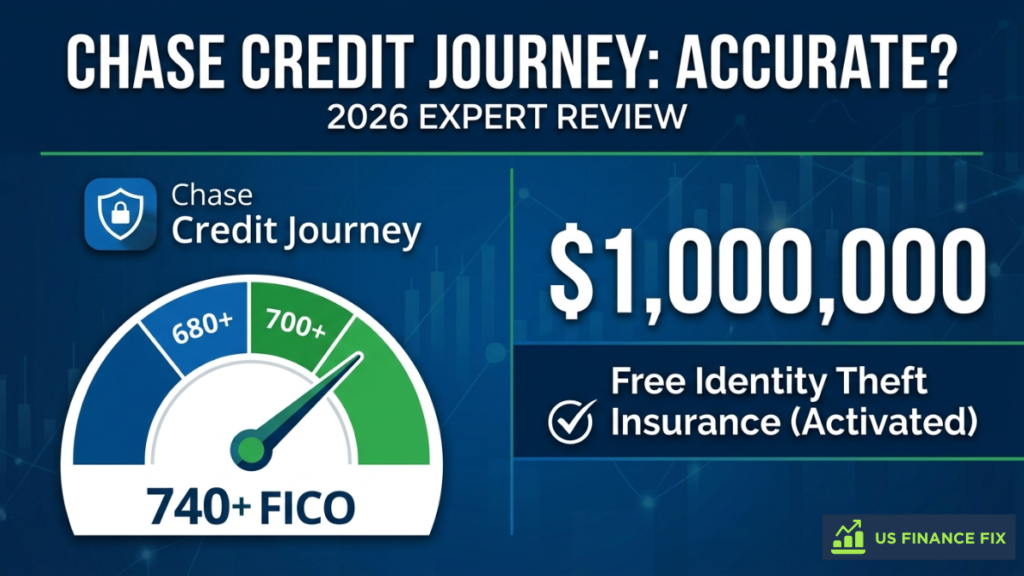
Most people think Chase Credit Journey is only for Chase customers, but it’s actually one of the best free financial tools of 2026. This Chase Credit Journey review covers how to claim its $1M identity theft insurance and whether its Experian-based score is accurate enough to help you reach a 740+ FICO.
March 2026 Update: Chase has expanded the free Credit Journey suite to include real-time dark web monitoring for linked email addresses.
The 2026 Verdict: Is Chase Credit Journey Good?
Chase Credit Journey is a highly accurate, free tool that provides a VantageScore 3.0 based on Experian data, making it one of the most underrated credit monitoring options in 2026. It is completely legitimate, safe, and — crucially — open to anyone, not just Chase customers.
Best for: Chase bank or credit card customers who want seamless integration, anyone who wants $1M identity theft insurance at no cost, and people just starting their credit-building journey who need a simple, guided dashboard.
Not ideal for: Borrowers preparing for a mortgage application (you’ll need your actual FICO score), or anyone who needs visibility across all three bureaus simultaneously.
Our rating: 4.3 / 5 — Outstanding free protection, held back only by its single-bureau limitation and weekly (not daily) updates.
If you’re ready to start monitoring right now, you can sign up for Chase Credit Journey here for free.
Is Chase Credit Journey Accurate? (VantageScore vs. FICO)
Many users are confused when they see a different score in Chase Credit Journey compared to other apps. The score is 100% accurate, but it is based on the VantageScore 3.0 model using Experian data.
- VantageScore vs. FICO: While 90% of lenders use FICO, Chase uses VantageScore. Because these models weigh factors like “Credit Age” and “Available Credit” differently, your score might vary by 20–40 points between them.
- The Single-Bureau Factor: Chase only shows your Experian report. If you have an account or a late payment that only reports to Equifax or TransUnion, it won’t appear here, making the score seem “higher” or “lower” than your true average.
- Update Frequency: Your score refreshes every 7 days. If you just paid off a debt, you won’t see the “accurate” new number until the next weekly update.
How accurate is Chase Credit Journey?
Chase Credit Journey is highly accurate for what it measures. It pulls your real VantageScore 3.0 directly from Experian, so the score it shows is genuine — not estimated or approximated. However, it will typically differ from your FICO score by 20–40 points, because FICO and VantageScore weigh factors like credit age and available credit differently. It also only reflects your Experian file, meaning activity on your TransUnion or Equifax reports won’t appear here.
Bottom line: Accurate for tracking trends and monitoring Experian — not a substitute for your FICO score before a major loan application.
Chase Credit Journey Review: Pros and Cons (2026)
| Pros | Cons |
| 100% Free: No Chase account required. | Single Bureau: Only monitors Experian. |
| $1M Identity Insurance: Included at no cost. | VantageScore: Not the FICO score lenders use. |
| Dark Web Monitoring: Real-time SSN alerts. | Weekly Updates: Doesn’t refresh daily. |
| No Credit Impact: Uses “Soft Inquiries.” | Limited Features: No credit lock/freeze tool. |
Is Chase Credit Journey Legitimate?
Yes, Chase Credit Journey is completely legitimate. It is an official product operated by JPMorgan Chase & Co. — the largest bank in the United States by assets — in direct partnership with Experian, one of the three major credit bureaus.
A few things that confirm its legitimacy:
- It’s accessible directly through chase.com — not a third-party site mimicking Chase
- The $1M identity theft insurance is a real policy backed by a licensed insurance provider, not a marketing claim
- It uses Experian’s actual credit data — the same bureau that lenders and landlords pull from
- No credit card or Chase account is required — a scam product would never give away this much for free
If you’re worried about entering personal information, Chase uses the same bank-level 256-bit encryption it uses for its online banking platform.
Who Is Chase Credit Journey Best For?
- Chase customers: If you already bank or hold a credit card with Chase, this integrates directly into your app — zero setup friction, one dashboard for everything.
- Identity theft worriers: The $1M insurance and dark web SSN monitoring make this the strongest free option available for anyone concerned about data breaches in 2026.
- Credit beginners: The Score Planner gives new credit users a concrete, data-driven roadmap rather than vague advice. If you’re building credit from scratch, this is your starting tool.
How to Set Up Chase Credit Journey: Step-by-Step Guide (2026)
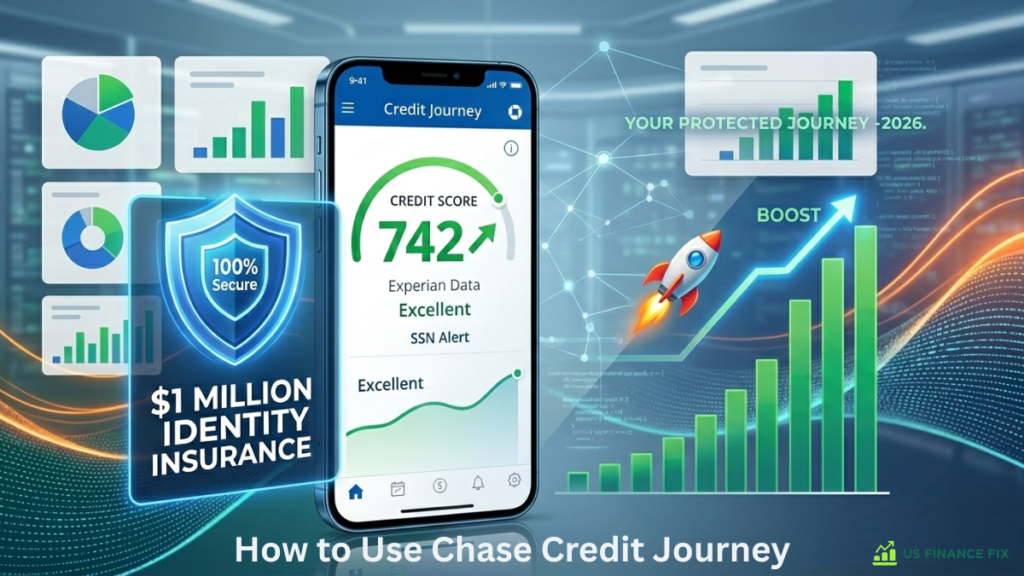
1. Activate the “Hidden” $1M Identity Insurance
Most users sign up for the score but forget to opt-in to Identity Monitoring. In 2026, this is Chase’s biggest competitive advantage over Credit Karma.
- What it covers: Up to $1M for legal fees, lost wages, and recovery expenses if your identity is stolen.
- The “Concierge” Benefit: You get access to a 24/7 restoration specialist who does the hard work of calling bureaus for you.
- How to do it: Go to the “Alerts” tab and manually toggle Identity Monitoring to “On.”
- How to File a Claim: If you receive an alert and suspect fraud, do not wait. You can contact the Benefits Administrator directly through the “Support” link in the app. They provide 24/7 assistance to help you freeze your credit and begin the recovery process.
2. Follow the Experian-Powered “Score Planner”
Chase uses real-time data from Experian to build you a custom roadmap. Instead of guessing which card to pay off, use the Score Planner to set a target (e.g., “I want a 720 score by June”).
Alex’s Pro Tip: The planner will tell you the exact dollar amount to pay down on your balances to trigger a score increase. Follow it to the penny for the fastest results.
Once the Planner identifies your target balance, execute it using the AZEO method — the utilization strategy FICO high-achievers use to squeeze maximum points from a single paydown.
3. Use “Dark Web Surveillance” for SSN Protection
Identity theft in 2026 is driven by AI-powered data breaches. Chase Credit Journey scans the dark web for your Social Security Number, email, and phone number. If your data appears in a new breach, you’ll receive a push notification immediately, allowing you to change passwords or freeze your credit before damage is done.
If a dark web alert reveals fraudulent accounts on your Experian report, your next step is to dispute those errors directly with the bureau — a process that can remove inaccurate items and recover lost points within 30–45 days.
4. Master the “Score Simulator” Before Big Purchases
Planning to buy a car or a home? Use the Score Simulator to see how a new “Hard Inquiry” will impact your current standing. It can simulate scenarios like:
- Opening a new credit card.
- Increasing your credit limit on an existing card.
- Closing an old account (warning: this usually hurts your score!).
Chase Credit Journey vs. Credit Karma: 2026 Comparison
| Feature | Chase Credit Journey | Credit Karma |
| Bureaus Covered | Experian (1) | TransUnion & Equifax (2) |
| Score Model | VantageScore 3.0 | VantageScore 3.0 |
| Identity Insurance | Yes ($1M included) | No |
| Update Frequency | Every 7 Days | Daily (or Every 7 Days) |
| Dark Web Alerts | Included (SSN & Email) | Basic Monitoring |
| Credit Lock Tool | No (Requires Experian) | Yes (TransUnion only) |
| Cost | 100% Free | 100% Free |
The Verdict: If you want protection, Chase is better because of the insurance. If you want a wider view of your credit report, Credit Karma is better because it covers two bureaus instead of one.
Complete Coverage Solution: “Because Chase only monitors your Experian report, you are blind to what’s happening on your other two credit files. To get 3-bureau coverage for free, I recommend pairing this with a Credit Karma strategy to see your TransUnion and Equifax data simultaneously.“
Chase Credit Journey Review 2026: Frequently Asked Questions
Is Chase Credit Journey actually free?
Yes. It is 100% free for everyone, even if you do not have a Chase credit card or bank account. There are no hidden monthly fees or “premium” tiers required to unlock the $1M identity theft insurance.
Which credit bureau does Chase use?
Chase Credit Journey provides your VantageScore 3.0 based on Experian data. While it monitors your Experian file, it does not currently provide reports or scores from TransUnion or Equifax.
Does using Credit Journey hurt my score?
No. Checking your score through Chase is a “soft inquiry.” You can check it multiple times a day or even use the Score Simulator without impacting your credit score in any way.
What is the difference between Credit Karma and Chase Credit Journey?
The main difference is the bureau and the insurance. Credit Karma shows TransUnion and Equifax data but offers no insurance. Chase shows Experian and includes $1M in identity theft insurance. Most experts recommend using both together to cover all three bureaus for free.
Is the $1M identity theft insurance legit?
Yes. It is a real benefit provided by Chase to all enrolled users. It covers up to $1M in recovery expenses (like legal fees or lost wages) and includes a 24/7 restoration concierge to help you fix your credit if your identity is stolen.
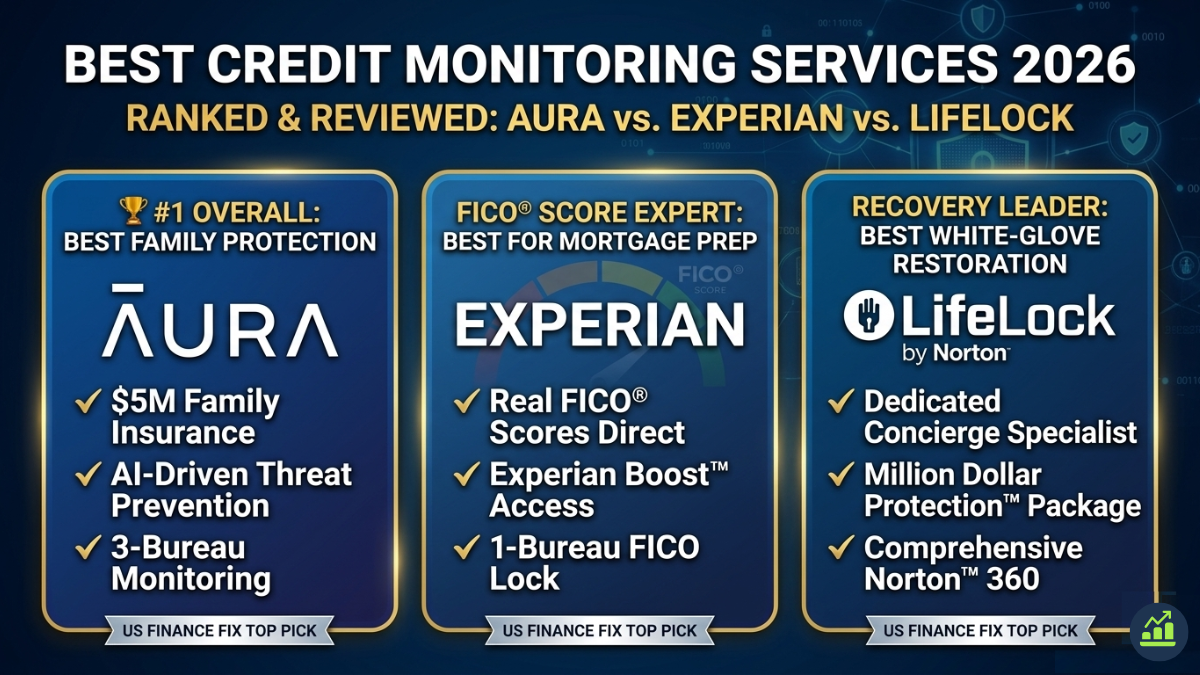
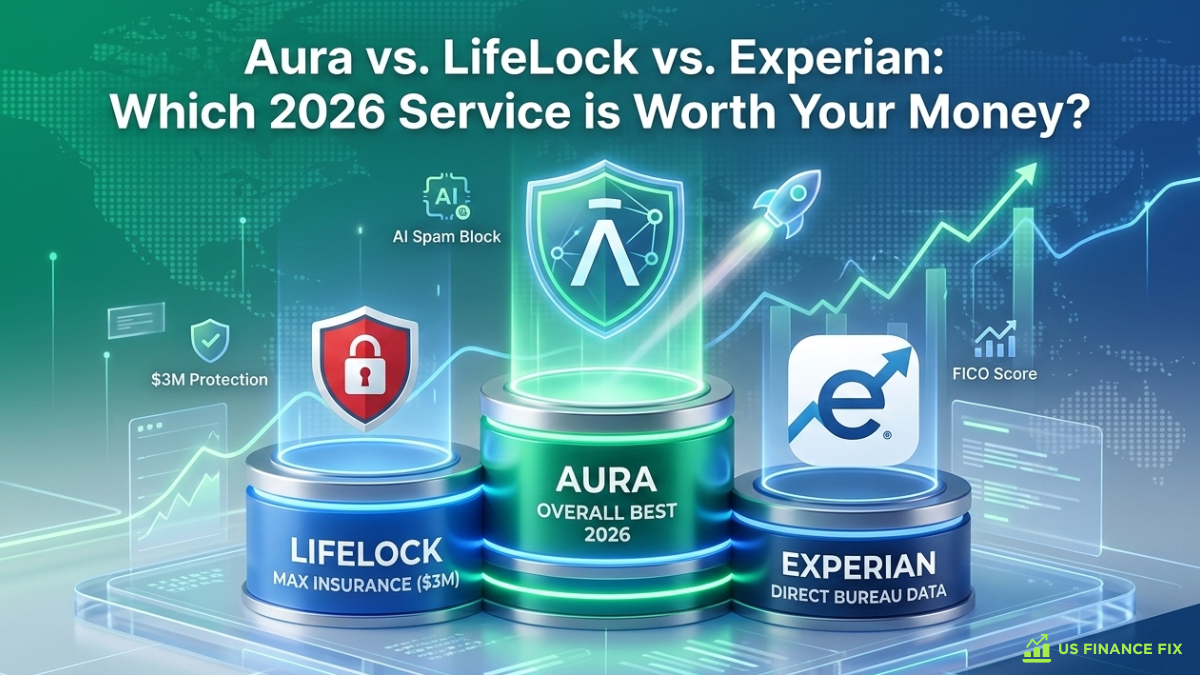
Want to see how Chase stacks up against the paid pros? Check out our latest comparison of the Best Credit Monitoring Services in the US to see if a paid plan is worth the upgrade for your family.

Alex Hale is an independent personal finance researcher with a background in the US banking industry. Alex specializes in breaking down the fine print — Schumer Boxes, fee schedules, and cardholder agreements — so readers get the full picture before applying for any financial product.
More about Alex & our editorial process →Get the US Finance Fix Weekly
Join 1,200+ Americans receiving Alex Hale’s weekly breakdown of credit card secrets, debt-payoff strategies and investment opportunities.